How to Choose Between 3000K and 6000K Street Lighting?

Time:2026-11-08 Author:Charlotte
0%

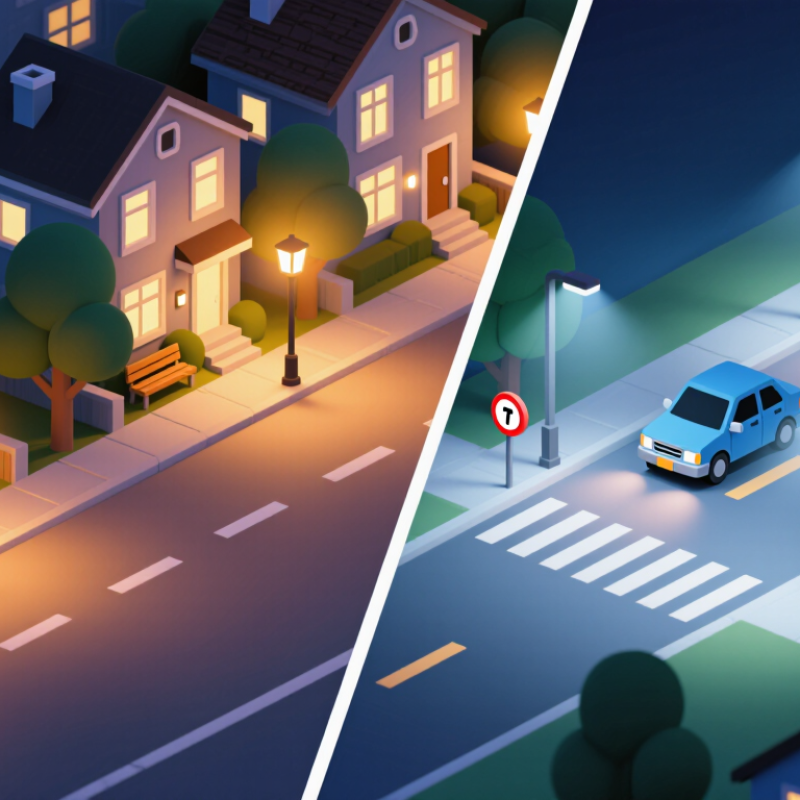
Street lighting shapes how people see a road after dark, but color temperature is only one part of a good lighting plan. The choice between 3000K and 6000K can affect visual comfort, how surfaces appear, and the character of a neighborhood. A 3000K lamp gives off a warmer, amber-toned light. It may feel less stark on a residential street, where homes, trees, and sidewalks sit close to the roadway. A 6000K lamp appears much cooler and whiter. It can make signs and road markings look crisp, though that impression depends on the fixture, its optics, and the surrounding conditions.

So, How to choose between 3000K and 6000K for street lighting? Start with the road’s purpose, not a preference for warm or cool light. Consider traffic speed, pedestrian activity, nearby housing, existing lighting, and the quality of the luminaire. Compare real products where possible; two fixtures with the same color temperature can still distribute light very differently. Check measured performance, glare control, uniformity, and energy use alongside color temperature. Local lighting guidance and a qualified lighting professional can help translate those factors into a practical specification. There is no universal winner. A warmer option may suit one street, while a cooler option may be considered for a different setting. And sometimes, the available evidence leaves room for judgment. This guide explains the trade-offs, common misconceptions, and questions to ask before selecting a street-lighting color temperature.
How to Choose Between 3000K and 6000K Street Lighting?

Understanding What 3000K and 6000K Mean in Street Lighting

In street lighting, 3000K and 6000K describe correlated colour temperature (CCT), not the lamp’s physical operating heat. A 3000K source usually looks warm white, like light on a brick pavement at dusk. A 6000K source appears cooler and bluer, closer to a clear, pale sky. The numbers are measurable specifications, but they do not tell you how bright a road will be.

That distinction matters. The International Commission on Illumination’s CIE 191:2010 report explains that nighttime visual response depends on light level and spectral distribution, not CCT alone. In practice, a driver’s view also changes with wet asphalt, glare, mounting height, and the contrast of a pedestrian’s clothing. A 6000K lamp can make details feel crisp, yet it may look harsh against dark surroundings. A 3000K lamp can feel calmer, though poor optics can still leave shadows. Not a simple trade-off. The Illuminating Engineering Society’s RP-8-22 roadway-lighting guidance focuses on measurable needs such as visibility and uniformity; CCT is only one design choice. Compare both options at the same road illuminance and check the actual photometric data. Then inspect the road after rain. That part is easy to overlook.

Comparing Visibility, Color Appearance, and Nighttime Comfort

A 3000K streetlight casts a warm, slightly amber pool across asphalt and sidewalks. A 6000K source looks cooler and whiter, making painted lines and some object edges seem crisper. But color temperature alone cannot tell you which street is safer. Output, uniformity, optics, and glare matter just as much.

The CIE’s 191:2010 report places peak visual sensitivity near 555 nanometers in bright conditions and 507 nanometers in very dim conditions. That shift helps explain why blue-rich light can appear relatively bright at night. It does not prove that 6000K lighting improves road visibility. The IES RP-8-22 roadway-lighting standard instead emphasizes criteria such as pavement luminance, uniformity, and glare control. Not automatically safer.

For residential streets, 3000K often gives faces, brick, and foliage a less stark appearance. It may also feel gentler outside bedroom windows, though shielding and dimming can matter more than CCT. A 6000K lamp can make a wet road look sharply defined, yet its cool glare may be uncomfortable for some drivers. I would compare both options at the same mounting height and output, then inspect the road from a driver’s eye level. That comparison is imperfect: weather, eyesight, and nearby surfaces change what people perceive.

How to Choose Between 3000K and 6000K Street Lighting? — Comparing Visibility, Color Appearance, and Nighttime Comfort
Comparison Dimension 3000K Street Lighting 6000K Street Lighting Practical Consideration
Correlated color temperature (CCT) Warm-white appearance; relatively less blue in its visible spectrum than a typical 6000K source. Cool-white to bluish-white appearance; relatively more short-wavelength visible light than a typical 3000K source. CCT describes the apparent color of the light, not its brightness, color-rendering quality, or energy efficiency.
Appearance of streets and surroundings Creates a warmer visual impression; surfaces may appear less cool-toned. Creates a cooler visual impression; some details can appear more sharply contrasted to observers. Perceived color and contrast also depend on the lamp’s spectrum, surface colors, and the observer’s vision.
Visibility at the same measured illuminance Can provide effective visibility when lighting levels, uniformity, and optics are appropriate. May feel brighter or appear more visually crisp in some conditions, but does not automatically provide better visibility. Compare installations at equivalent maintained illuminance and assess uniformity, glare, and visibility of relevant targets.
Nighttime visual comfort Often preferred where a warmer nighttime environment is desired. May feel stark or overly cool to some people, particularly if the installation is very bright or poorly shielded. Comfort is subjective and is strongly affected by glare, brightness, uniformity, and adaptation to darkness.
Glare and light distribution CCT alone does not determine glare. CCT alone does not determine glare. Glare depends largely on luminaire brightness, mounting, aiming, shielding, and viewing angle. Good optical design matters at either CCT.
Color recognition Color recognition depends on the source’s spectral power distribution and color-rendering characteristics. Color recognition depends on the source’s spectral power distribution and color-rendering characteristics. Check color-rendering specifications and real-world performance; CCT by itself is not a measure of color fidelity.
Potential effects on wildlife and the night sky Typically emits a smaller proportion of short-wavelength light than a comparable 6000K source, but impacts still depend on the full spectrum and how much light escapes upward. Typically has a greater short-wavelength component; this may increase concerns about ecological effects and skyglow, depending on spectrum and installation. Use only the light needed, direct it downward, avoid unnecessary nighttime operation, and consider local ecological guidance.
Good fit when A warmer appearance and reduced short-wavelength content are priorities, while meeting the required visibility and safety criteria. A cooler appearance is specifically preferred and the design has been evaluated for glare, comfort, and environmental impact. Select based on the road’s purpose, applicable lighting standards, user needs, and a site-specific assessment—not CCT alone.
Important comparison note A fair comparison should hold maintained illuminance, uniformity, luminaire optics, mounting height, and operating conditions as constant as possible. CCT alone cannot establish which installation is safer or more efficient.

Assessing Road Type, Traffic, and Surrounding Environment

How to Choose Between 3000K and 6000K Street Lighting?

Road type and traffic should guide the choice. A residential street with parked cars, sidewalks, and nearby homes may suit 3000K lighting. Its warmer tone can feel less harsh in a quiet setting. A busy junction or road with complex markings may benefit from the sharper appearance of 6000K. But color temperature is not brightness. Check light levels, uniformity, glare, and fixture optics too. Context matters.

The surroundings can change the decision. Trees, wet pavement, shop signs, and nearby windows affect how light is perceived. Cooler light may make details look crisp, yet it can also appear stark against a dark, leafy street. Warmer light may blend better with homes, though poor spacing can leave dark patches. Traffic volume matters, but so do speed and pedestrian activity. A quick site check can miss seasonal changes, so review the area after dark and in different weather when possible.

Tips: Compare both tones on the actual road, not just a sample chart. Keep output and fixture placement consistent during testing. Test after dark. If glare or uneven patches remain, reconsider the layout before choosing a color temperature.

Matching Color Temperature to Safety and Community Needs

Choosing between 3000K and 6000K street lighting means weighing visibility against comfort and neighborhood character. A 3000K light gives off a warmer tone, often suited to residential streets where people walk past homes and trees. It can feel calmer at night. A 6000K light appears much cooler and may make details seem sharper, but that does not automatically make a street safer. Glare, uneven coverage, and excessive brightness can hide details instead. Visibility matters.

Tips: Check the actual street after dark, not just a fixture sample. Look for dark patches, glare at eye level, and light spilling into bedroom windows. Compare both color temperatures at similar brightness and with the same optics.

Match the choice to the setting. A busy junction may benefit from crisp visual contrast, while a quiet side street may call for warmer, less intrusive light. Still, color temperature alone cannot solve poor lighting design. Ask a qualified lighting professional to assess spacing, mounting height, and measured light levels. A short trial can help residents respond to real conditions, though opinions may differ. That uncertainty is worth taking seriously.

Checking Local Standards and Lighting System Compatibility

Before choosing 3000K or 6000K, check the local roadway specification and the approving authority’s current guidance. Some projects set a maximum color temperature, while others focus on maintained light levels, glare, or spill into nearby homes. Requirements can vary by road type and location. Check the paperwork. Confirm the required edition, permit conditions, and photometric plan rather than relying on a general recommendation. A warmer 3000K tone may feel less stark, while 6000K appears cooler; neither choice guarantees better visibility by itself.

Check the existing system before ordering lamps or fixtures. Integrated LED units may not allow a simple color-temperature change. Confirm driver voltage and current, dimming controls, photocell operation, mounting dimensions, and optical distribution. Ask for photometric data showing how light reaches the road and sidewalks. Also compare delivered lumens, not just wattage: different color temperatures can have different outputs. A small sample installation can reveal uneven patches or unwanted glare that a specification sheet may not show. I’d still review it at night; a daytime check misses a lot.

Tips: Match the fixture to the approved design, then test controls and light levels on site. Keep a record of settings and measurements. Small details matter.

FAQS

Is 3000K or 6000K safer for street lighting?

Neither color temperature guarantees safer streets. Glare, uneven coverage, and excessive brightness can hide details.

Where might 3000K lighting be a good fit?

Its warmer tone may suit residential streets near homes and trees. It can feel calmer at night.

Does 6000K lighting always make details easier to see?

It may create a sharper-looking contrast, but brightness and glare matter too. Cooler light is not automatically safer.

How should a community compare the two options?

Check the street after dark for dark patches, eye-level glare, and light entering bedroom windows. Compare similar brightness and optics.

What should be checked before selecting a color temperature?

Review local roadway specifications and current approval guidance. Check permit conditions, required editions, and the photometric plan.

Can an existing LED fixture simply be changed from 3000K to 6000K?

Not always. Integrated units may not support a simple color-temperature change.

Which system details should be confirmed before ordering fixtures?

Check voltage, current, dimming controls, photocell operation, mounting dimensions, and optical distribution. Small details matter.

Why compare delivered lumens instead of wattage alone?

Different color temperatures can produce different light outputs. Wattage alone can be misleading.

Can a sample installation help assess the design?

Yes. A short night-time trial can reveal uneven patches or unwanted glare that paperwork may miss. Opinions may still differ.

Conclusion

Choosing between 3000K and 6000K street lighting starts with understanding color temperature. A 3000K light produces a warmer, softer appearance, while 6000K creates a cooler, bluer-white effect. These options can differ in how clearly colors and details appear, as well as how comfortable the light feels at night. How to choose between 3000K and 6000K for street lighting? Consider the road’s purpose, traffic levels, and nearby surroundings rather than relying on brightness alone.

Warmer lighting may suit residential streets and community areas where a calmer nighttime atmosphere is important. Cooler lighting may be considered for locations that need a crisp visual impression, but its effect on comfort and the surrounding environment should also be assessed. The best choice balances visibility, safety, and community preferences. Before selecting a color temperature, check applicable local lighting standards and confirm that the chosen option is compatible with the existing lighting system.

Charlotte

Charlotte

Charlotte is a seasoned marketing professional with a deep understanding of the company's portfolio and a passion for elevating its presence in the market. With a keen eye for detail and a commitment to excellence, she ensures that our professional blog is regularly updated with insightful articles......