Choosing the right wattage for solar street lights is crucial for maximizing energy efficiency and ensuring optimal illumination. As noted by industry expert John Smith, “Selecting the correct wattage can make or break your solar lighting project.” This highlights the importance of understanding how wattage impacts performance and longevity.
When evaluating options, consider the specific lighting needs of the area. A dimly lit park might require a lower wattage compared to a busy street. Environmental factors, such as the height of poles and surrounding obstructions, also play a significant role. These elements can affect the brightness needed for safety and visibility.
Additionally, it's essential to reflect on common mistakes in wattage selection. Many may underestimate the required output, leading to inadequate lighting. Others might overestimate, resulting in excessive energy consumption. Balancing these aspects is vital. Exploring various wattage options can help achieve optimal results. Understanding how to choose the right wattage for solar street lights ensures effective and sustainable lighting solutions.
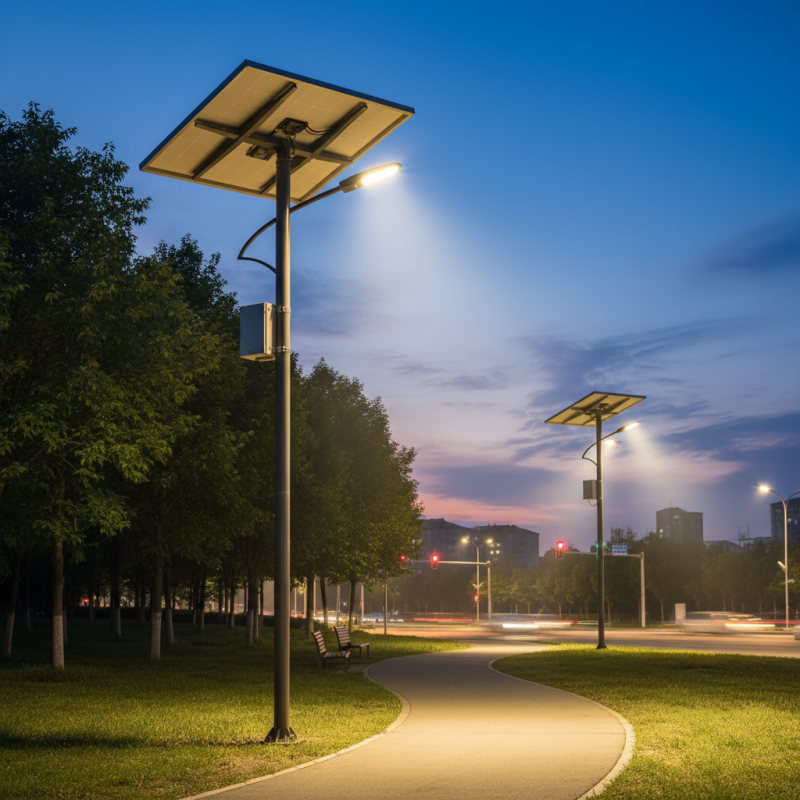
Factors Influencing Wattage Selection for Solar Street Lights
When selecting wattage for solar street lights, several key factors come into play. The primary consideration is the area needing illumination.
Larger spaces typically demand higher wattage for adequate brightness. Conversely, smaller areas might not require as much power. Local weather conditions are also crucial.
In places with frequent overcast skies, a higher wattage might provide necessary light on darker days.
It's important to assess the lumen output. Lumens measure brightness, not wattage. A higher lumen output can enhance visibility,
especially in busy areas. The height of the pole and the distance between lights are also vital. taller poles may need higher wattage for effective coverage,
while closer installations can work with less.
Another factor is energy efficiency. Sometimes, high wattage can lead to over-illumination, wasting energy.
A well-planned strategy might result in lower wattage but still sufficient lighting quality.
Additionally, consider maintenance costs. Choosing the right wattage impacts not only initial investment but also future expenses.
Taking time to evaluate these elements can lead to better lighting solutions.
Understanding the Brightness Requirements for Different Locations
Choosing the right wattage for solar street lights depends on understanding the brightness needs of different areas. In urban neighborhoods, lights should provide higher illumination. Crowded streets and busy intersections require around 80 to 120 watts. This ensures safety and visibility for pedestrians and drivers. Meanwhile, residential areas might need less brightness. Here, 30 to 60 watts could be sufficient, promoting a calmer ambiance.
In parks or secluded paths, cautious consideration is vital. These locations may only require about 40 to 80 watts. Too much light can disturb wildlife and alter the natural environment. Nevertheless, insufficient brightness might lead to safety concerns. Striking a balance is essential. Observations and community feedback can offer insights into specific needs. Each location has its unique characteristics that warrant different approaches to lighting.
Some might think less wattage always equals savings. Yet, choosing the wrong wattage can lead to increased costs for adjustments or replacements later. Over-lighting can create glare and discomfort, making it challenging to navigate. It's crucial to evaluate the specific requirements of each area and think critically about how much light is truly necessary.
Brightness Requirements for Solar Street Lights by Location
Evaluating the Solar Panel Efficiency and Output
When evaluating solar street lights, the efficiency of solar panels plays a critical role. High-efficiency solar panels can convert more sunlight into usable electricity. A typical solar panel can achieve an efficiency rating between 15% to 22%. Investing in panels with high efficiency maximizes energy output, especially in areas with limited sunlight. This aspect is key to ensuring consistent performance in street lighting.
One practical tip is to assess the panel's output in watts. Standard solar panels range from 100W to 400W. Choosing the right wattage influences the overall brightness of the street light. For urban areas, a higher wattage is often necessary for adequate illumination. In contrast, rural areas might get by with lower wattage.
System losses can reduce overall efficiency. Reports suggest energy losses can be as high as 30%. Poor installation or low-quality components impact performance. To mitigate this, always look for reliable installation services. Compare multiple configurations to determine the optimal wattage for specific lighting needs. Being aware of these factors can save time and costs, ensuring you get proper lighting without overpaying.
Balancing Power Consumption with Battery Capacity
Choosing the right wattage for solar street lights requires careful consideration. A crucial factor is balancing power consumption with battery capacity. The wattage impacts how bright the light will be and how long it can run on solar power alone. According to recent industry reports, solar street lights typically use between 10 to 150 watts. However, too high a wattage can drain the battery quickly, especially in cloudy weather.
For optimal performance, consider these tips. First, select a wattage that matches your specific needs. For instance, residential areas may only require 30-50 watts, while highways might need 100 watts or more. Second, assess the battery capacity. A well-sized battery can store enough energy to power bigger lights through the night. It's common to pair 100 watt lights with a battery of at least 200Ah capacity to ensure longevity.
Be cautious with light distribution and wattage. Misjudging either can lead to over-illumination or insufficient lighting. According to the National Renewable Energy Laboratory, mismatched systems can underperform up to 30%. Regular evaluation and adjustments based on actual performance can save costs and enhance functionality. Aim for a well-balanced system to ensure efficiency and reliability.
Assessing Environmental Conditions Impacting Wattage Needs
When assessing wattage needs for solar street lights, environmental conditions play a crucial role. Different geographic locations exhibit varying levels of sunlight throughout the year. For example, areas in southern climates may receive over 300 sunny days per year, needing lower wattage to achieve adequate illumination. Conversely, northern regions might only benefit from around 150 sunny days, requiring higher wattage due to longer nights and harsher winters.
Urban environments present unique challenges as well. Streetlights must compete with city lights, which can cause light pollution. According to a recent industry report, effective streetlights should aim for luminance levels between 100 to 150 lux. This may demand adjustments in wattage depending on the surrounding infrastructure. Additionally, local climate factors like fog or heavy rainfall can impact visibility. The International Energy Agency suggests that solar streetlights should output higher lumen ratings in such conditions to ensure safety.
It's essential to evaluate these factors critically. Misjudging local sunlight exposure could lead to underperforming lights. Some projects focus solely on costs, ignoring vital environmental assessments. The failure to account for seasonal changes can diminish the effectiveness of solar streetlights, leaving certain areas inadequately lit during pivotal months. Observing and adapting to the specific environmental context may mitigate such risks and enhance overall street safety.
Top 10 Tips for Choosing Wattage in Solar Street Lights
| Tip Number |
Tip Description |
Recommended Wattage |
Environmental Factors Considered |
| 1 |
Assess the area to be illuminated |
30-50 Watts |
Urban areas with high density |
| 2 |
Consider the height of the light pole |
40-100 Watts |
Taller poles require higher wattage |
| 3 |
Examine the type of surrounding surface |
50-80 Watts |
Reflective surfaces may need less wattage |
| 4 |
Evaluate the type of street |
70-120 Watts |
Wide, busy streets require higher wattage |
| 5 |
Consider local weather conditions |
30-60 Watts |
Areas with frequent fog may need additional wattage |
| 6 |
Account for light pollution regulations |
20-50 Watts |
Low wattage to comply with regulations |
| 7 |
Determine the number of lights needed |
80-120 Watts |
Spacing can impact total wattage |
| 8 |
Look into solar panel efficiency |
50-100 Watts |
Higher efficiency may mean less wattage needed |
| 9 |
Choose appropriate LED technology |
20-80 Watts |
Different LEDs produce different light levels |
| 10 |
Review existing infrastructure |
30-70 Watts |
Compatibility with current systems |
Conclusion
When considering how to choose the right wattage for solar street lights, several key factors must be evaluated. These include understanding the brightness requirements for various locations, as different areas may necessitate different intensities of light. Additionally, the efficiency and output of solar panels play a crucial role in determining the appropriate wattage, as more efficient panels can generate more energy, thus influencing the lighting capabilities.
Balancing power consumption with battery capacity is another vital consideration; it is essential to ensure that the energy stored can adequately support the street light's wattage needs during nighttime. Moreover, environmental conditions, such as average sunlight exposure and weather patterns, can significantly impact the energy requirements and overall wattage selection. By thoroughly assessing these factors, one can make an informed decision on the optimal wattage for solar street lights, ensuring both functionality and sustainability.

 Boray Light