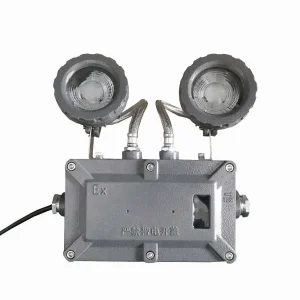
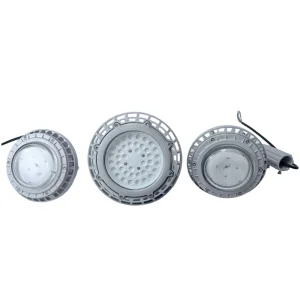
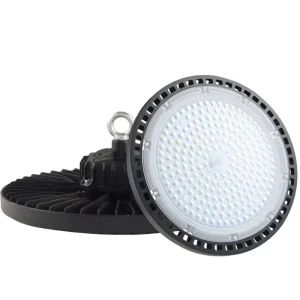
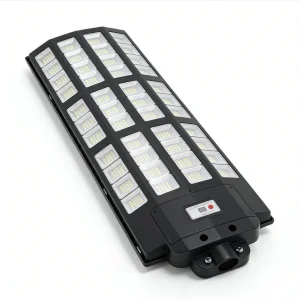
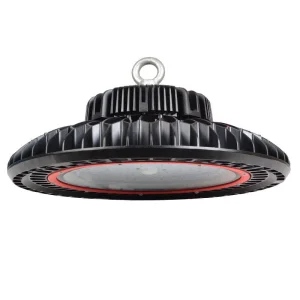
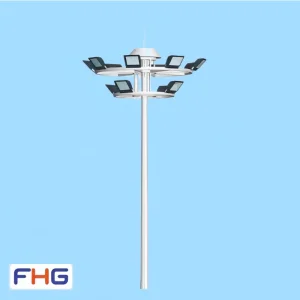
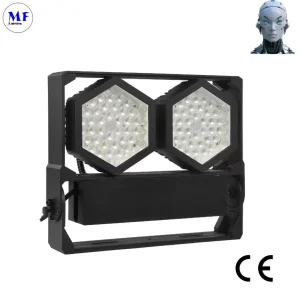
Explore our high-efficacy, explosion-proof, and commercial-grade solar flood lights, street lamps, and warehouse lighting fixtures engineered for extreme environments.
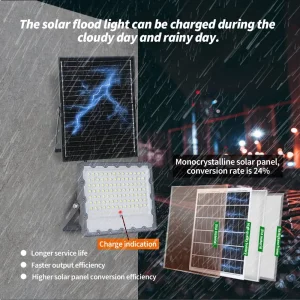
The global industrial outdoor lighting landscape is experiencing an paradigm shift. Once treated as auxiliary or temporary lighting options, solar-powered systems have moved directly into main-grid replacement territory. The driving forces are technological convergence across three distinct vectors: photovoltaic efficiency, battery density, and intelligent power management.
Historically, low conversion rates of polycrystalline silicon panels limited the operational autonomy of solar-powered luminaires. Today, the integration of premium monocrystalline silicon solar cells with multi-busbar (MBB) technologies has pushed commercial conversion rates beyond 22.5%. Even in low-irradiation geographical zones or during consecutive overcast days, modern panels yield sufficient micro-currents to trickle-charge the battery storage subsystem.
Simultaneously, the industry has universally shifted away from legacy lead-acid and gel batteries to advanced Lithium Iron Phosphate (LiFePO4) chemistry. These modern batteries support depth-of-discharge (DoD) values of up to 90% and withstand over 3,000 charge-discharge cycles before capacity degrades to 80%, outlasting older technologies by a margin of 5 to 1. When coupled with micro-controller units running Maximum Power Point Tracking (MPPT) algorithms instead of simple PWM, charging efficiency under partial shading increases by 15% to 30%.
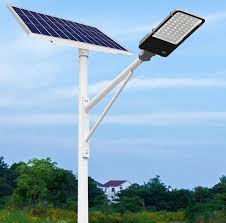
A statistical and technical breakdown of our operational metrics, material performance benchmarks, and R&D achievements.
B2B buyers, EPC contractors, and municipal procurement managers assess solar lighting equipment on criteria fundamentally different from those used in consumer markets. When procuring industrial-grade hardware, the focus pivots to Total Cost of Ownership (TCO), long-term operational stability, and structural wind resistance.
Buyers often focus on wattage, but the key metric is system efficacy (Lumens per Watt). Premium chips from brands like Lumileds or Osram coupled with optical-grade PMMA lenses deliver up to 180lm/W, satisfying illumination requirements at lower system costs.
Coastal developments, oil refineries, and marine terminals require heavy-duty corrosion protection. Specifying C4 or C5-M grade anti-corrosion coatings, combined with high-grade IP67/IP68 hardware, prevents premature system failures in harsh environments.
Batteries must be protected from high desert heat and sub-zero winters. Premium systems integrate BMS controls with thermal cutoff, active balance circuits, and insulated containment structures to maintain continuous operations.
As purchasing criteria shift toward product reliability and supply chain agility, China's lighting manufacturing clusters have evolved. Yangzhou Boray Light Co., Ltd. exemplifies this transition, combining specialized engineering with vertically integrated production lines in Yangzhou, Jiangsu Province.
Rather than assembling off-the-shelf parts, our production facilities run on a vertically integrated model. We manage production parameters across key component groups: structural aluminum die-casting, electrostatic spray coatings, LED light engine layout design, automated PCB SMD mounting, battery pack assembly, and electronic driver calibration.
By directly controling the manufacturing tolerances of components—ranging from high-output solar panels to structural support brackets—we eliminate quality gaps caused by sourcing from disparate suppliers. For B2B clients, this integration delivers:
A key factor that is often overlooked in solar street and flood lighting projects is wind-load structural engineering. Because solar panels act as sails in high winds, the support poles, mounting interfaces, and foundation bases must be calculated to withstand localized wind speeds.
Yangzhou Boray Light employs structural FEA (Finite Element Analysis) to evaluate wind loads based on projected local wind parameters. Our support structures utilize Q235 or Q345 high-grade steel, which undergoes double-sided hot-dip galvanizing and electrostatic polyester powder coating. This design achieves structural wind resistance up to 160 km/h (Class 12 typhoons) and prevents structural failure over long-term deployments.
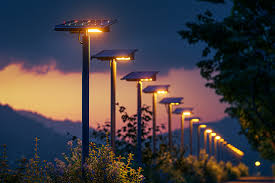
Industrial-grade solar lights must operate under diverse, challenging environmental conditions. The engineering configurations are adjusted to match these specific requirements:
Off-Grid Mining Sites & Remote Operations: In mining and extraction hubs (e.g., Western Australia, Northern Chile), grid extension is cost-prohibitive. Solar floodlights with high vibration resistance and dust-proof ratings operate reliably, providing workspace illumination for heavy machinery without requiring diesel fuel logistics.
Coastal & Marine Operations: Marine berths and salt-water shipping channels present highly corrosive conditions. We construct these products using 316-grade stainless steel hardware, electro-chemically treated aluminum housings, and silicone seals to prevent saltwater ingress.
Municipal Infrastructures & Smart Cities: High-density urban pathways and remote perimeter fences benefit from integrated motion sensors and smart dimming profiles. Utilizing radar sensors, the lighting system scales power based on pedestrian presence, extending battery autonomy during prolonged periods of bad weather.
Expert answers addressing the design, installation, operation, and maintenance of commercial-grade solar illumination systems.
Explore our heavy-duty floodlights, stadium lamps, and high bay fixtures built for extreme environments and industrial settings.
 Boray Light