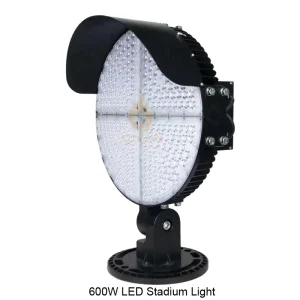
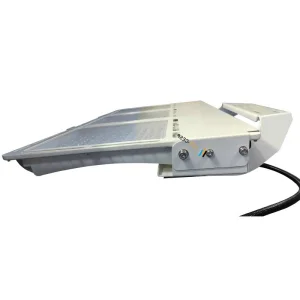
Explore our high-performance industrial luminaires integrated with Zigbee, NEMA, and precision motion-sensing capabilities.
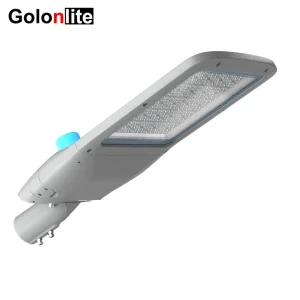
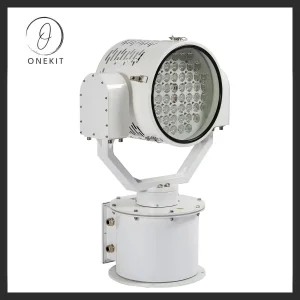
A decade of engineering leadership in municipal, industrial, and smart automated system lighting solutions.
Yangzhou Boray Light Co., Ltd. is strategically located in Yangzhou, Jiangsu Province—the heart of China's high-tech lighting manufacturing corridor. Operating for over 10 years, Boray Light has evolved into an ISO 9001:2015 certified manufacturer specializing in heavy-duty LED luminaires, solar energy grids, and digital communication-integrated lighting architectures designed specifically for modern logistics and warehousing spaces.
By leveraging advanced thermodynamic design, high-efficacy LED chip technology, and smart sensor network interfaces, we bridge the gap between architectural illumination and modern Warehouse Management Systems (WMS). Our solutions optimize energy conservation while directly boosting logistics workflow accuracy and personnel safety.
By sourcing raw drivers, optical-grade PC lenses, die-cast aluminum alloys, and IoT Zigbee/LoRa control boards within a 50km cluster of our Yangzhou plant, we eliminate logistics overhead and maintain absolute cost control over customized production runs.
Our engineers utilize TracePro, Pro/E, and DIALux to run localized ray-tracing and photometrics calculations. This ensures that every high bay delivers balanced light distribution, minimal glare (UGR < 22), and zero blind spots in high-rack environments.
Equipped with thermal shock chambers, salt-spray chambers, and integrating spheres, Boray Light ensures all industrial fixtures conform strictly to real-world deployment challenges, maintaining performance under high dust, moisture, and temperature fluctuations.
How modern warehouse hubs are moving away from legacy static illumination towards adaptive, digital, and sensor-driven network architectures.
Moving from manual switches to occupancy-based microwave and PIR motion sensors. Systems run at 10% standby output, scaling up instantly to 100% when forklifts approach, delivering up to 75% energy savings.
Implementation of Zigbee 3.0, Bluetooth Mesh, and LoRaWAN protocols. Every luminaire acts as a node within the facility's larger data framework, feeding runtime diagnostics, power draw data, and predictive driver faults back to central control.
Interfacing the light management system with the ERP/WMS database. High bays illuminate specifically along active picking routes designated by the order queue (Pick-to-Light guidance), streamlining throughput while maximizing safety.
Integrating high-capacity battery storage systems with localized rooftop photovoltaic arrays. System controls balance draw dynamically, using solar capacity during peak tariff rates and grid energy during off-peak hours.
Different industrial environments pose unique physical challenges. Our engineering team designs optimized luminaires to address the demanding physics of each site.
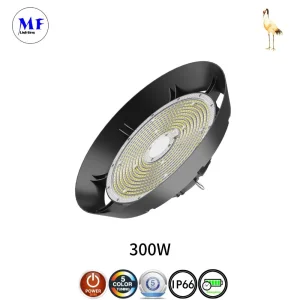
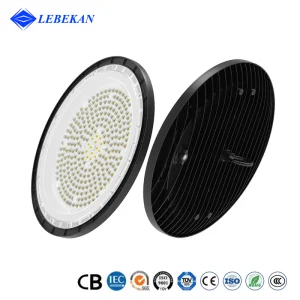
Operating in environments down to -30°C demands highly resilient LED drivers and advanced thermal management to prevent condensation from freezing on the electronics. Our 150lm/W UFO LED High Bays use specialized aluminum fins designed for rapid thermal dissipation in high-density airflow settings.
Salt atmosphere corrosion destroys ordinary aluminum casings within months. Boray's Marine Grade Anti-Corrosion LED Floodlights feature electro-polished 316 Stainless Steel brackets, multi-layer fluorocarbon coatings, and IP67/IP68 ingress ratings, shielding internal components from heavy ocean swells and atmospheric salinity.
Automated Guided Vehicles (AGVs) rely heavily on visual tracking systems and LiDAR. Sudden shadows or high-frequency optical flicker can cause navigation errors. Boray designs zero-flicker constant-current drivers that maintain absolute visual consistency across automated picking zones.
B2B procurement professionals need to mitigate sourcing risk. We align our manufacturing processes with global engineering and compliance codes.
Our products feature IP65, IP66, IP67, and IP68 laboratory certifications. This ensures that even under high-pressure water washdowns in food manufacturing facilities, internal circuitry remains completely dry.
High-intensity warehouse glare causes operator eye fatigue and raises accident rates. We utilize specialized optical PC lenses and recessed reflector geometries to lower the Unified Glare Rating down to industry-safe thresholds.
In line with global ESG directives, Boray Light uses fully recyclable aluminum alloys, lead-free soldering, and modular, field-replaceable drivers to extend the typical fixture lifespan well past 50,000 operational hours.
Smart lighting systems typically interface with a WMS using two main architectures. First, they can connect via a local gateway bridging industrial protocols like Modbus, DALI-2, or BACnet to the central system. Second, they can use wireless networks like Zigbee or Bluetooth Mesh to communicate with API controllers. When a picker is directed to a specific aisle, the WMS pushes a command to the lighting controller, which ramps up the light levels in that zone to 100% while keeping inactive areas dimmed. This workflow improves order picking speeds and reduces energy use.
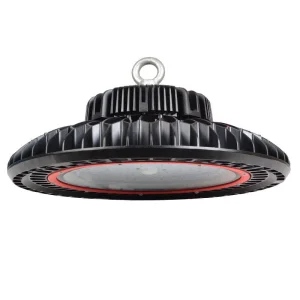
High temperatures degrade LED light output and lead to early driver failure. Boray Light resolves this by using die-cast aluminum alloys with high thermal conductivity. Our UFO high bay fixtures feature custom fin profiles that encourage natural air convection. This path keeps the junction temperature of our LED chips below 85°C, ensuring we meet our 50,000-hour L70 life rating.
Marine-grade fixtures must withstand salt spray, high humidity, and physical vibration. Our fixtures use 316-grade stainless steel housings and electrophoresis treatments. The gaskets are made of durable VMQ silicone, which maintains an airtight IP68 seal. These measures protect the internal optics and electronics from corrosion in harsh marine, coastal, and industrial environments.
Microwave sensors emit high-frequency electromagnetic waves to detect movement through wood, glass, and thin walls. This ensures reliable detection from mounting heights of over 12 meters. Passive Infrared (PIR) sensors rely on detecting heat signatures, which can be less effective in cold-storage zones or environments where forklifts run hot. Microwave sensors deliver more consistent coverage across wide aisles.
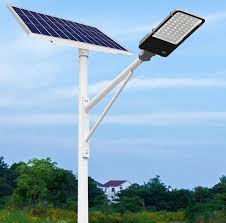
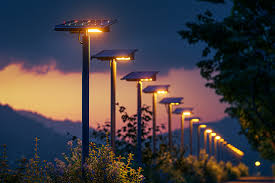
Yes, solar-powered lighting is ideal for perimeter paths, parking lots, and loading bays. Combining high-efficiency monocrystalline solar panels with LiFePO4 battery packs allows perimeter lights to operate independently of the main building grid. These systems charge during daylight hours and use smart motion sensors to provide reliable overnight illumination without increasing energy bills.
Heavy-duty floodlights, emergency backup units, and high-wattage shop lights engineered for uninterrupted commercial operations.
 Boray Light