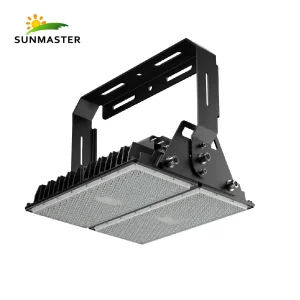
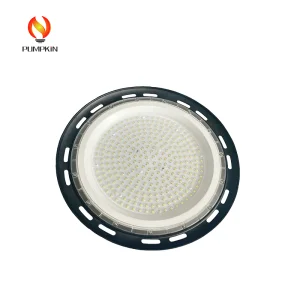
Engineered to operate in extreme environments, our global product lineup delivers premium lumens efficiency, IP-rated sealing protection, and resilient performance.
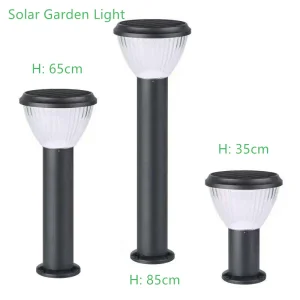
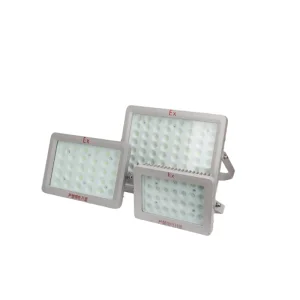
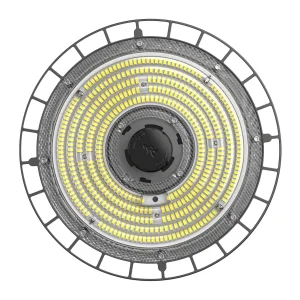
Unlocking operational efficiency and environmental durability in modern sub-zero logistics operations.
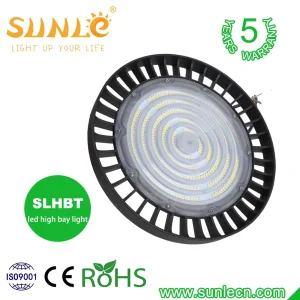
Standard luminaires quickly experience component failure due to electrolyte freezing and thermal contraction. Modern high bays feature non-compromised thermal pathways, aerospace-grade aluminum dissipation, and specialized gas-permeable breathers that neutralize internal vacuum pressure spikes.
Global procurement teams prioritize intelligent motion arrays. At -20°C, traditional PIR sensors undergo sensitivity degradation. Next-gen high bays utilize micro-frequency wave radar and low-temperature calibrated sensors integrated via DALI-2 or Zigbee protocols to drive energy consumption down by 70%.
Cold chain facilities require constant high-pressure chemical washdowns and face persistent moisture condensation. Sourcing parameters have evolved to demand high-grade polycarbonate optics (to prevent shattering risk over processing lines), robust IP66/IP69K ingress seals, and zero-maintenance finishes.
Yangzhou Boray Light Co., Ltd. is located in Yangzhou, Jiangsu Province—one of China’s leading lighting manufacturing hubs. Founded over a decade ago, Boray Light has grown into a professional manufacturer and supplier specializing in LED lighting and solar solutions, serving clients worldwide with innovative, energy-efficient products.
Integrating R&D, production, sales, and service under one single unified quality management framework, we have built a self-owned modern factory equipped with state-of-the-art automated testing and assembly lines. We serve a diverse range of sectors, providing custom projects for municipal networks, road systems, industrial logistics complexes, and hazardous mining environments.
Every product is developed with strict attention to detail, from chip-level optical path design and consistency to robust anti-corrosive multi-layer powder coating. This ensures that the systems delivered maintain stable lux footprints over decades of uninterrupted service.
A comparison of high bay performance metrics across general warehousing environments and extreme cold storage facilities.
| Engineering Parameter | Standard High Bay Light | Cold Storage Rated High Bay | Yangzhou Boray Premium Series |
|---|---|---|---|
| Operating Temp Range | -10°C to +40°C | -30°C to +40°C | -40°C to +55°C (Extended Threshold) |
| Driver Capacitors | Standard Electrolytic (freeze-prone) | Low-temp Electrolytic / Solid State | High-Grade Solid Conductive Polymer |
| Optics Composition | Standard PMMA or Glass (shatter risk) | Hardened PC / Tempered Safety Glass | Shatterproof High-Transmittance Polycarbonate |
| Ingress Protection | IP65 Rated | IP65 / IP66 Rated | IP66 / IP69K (Hermetically Sealed) |
| Pressure Equalizer | Not Included | Membrane Vent (Optional) | Integrated PTFE Breathing Equalization Valve |
| Lumen Efficacy | 120 - 140 lm/W | 140 - 160 lm/W | 170 - 180 lm/W (LM-80 Certified Chips) |
Our dedicated engineering department keeps pace with the forefront of LED and solid-state solar lighting technologies. Through advanced optical and structural diagnostic tools—including TracePro, Pro/E, and DIALux simulation suites—we map lux requirements to precise mechanical design parameters.
Our deep supply chain integration ensures that key components, including high-performance LED chips, drivers, heat-sink housings, batteries, and solar collectors, are developed and selected for seamless compatibility. This integration guarantees consistent color temperature stability and eliminates driver system failures under high-cycle workloads.
Boray Light maintains long-term research partnerships with leading universities and industrial institutes. This network drives continuous innovation in thermal and optical science, ensuring our clients receive robust lighting systems tailored to their operational needs.
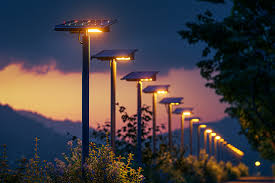
From modern automated logistics hubs to complex industrial layouts, we map out technical pathways designed to future-proof your lighting infrastructure.
AS/RS environments utilize tight racking layouts with heights exceeding 18 meters. Standard wide-beam luminaires lose significant lumens on rack tops, leaving floors dim. We design specialized 30°x90° and 60°x120° polar light curves that deliver uniform illumination directly to floor surfaces and picking faces.
Cold chain facilities pull significant energy when heavy refrigeration compressors cycle on and off. This creates power line transients and voltage surges. Our systems integrate 6kV/10kV surge protection devices (SPD) directly inside the IP66 driver casing, protecting internal electronics from voltage spikes.
We target energy optimization by pairing advanced drivers with smart controls. Our luminaires are built using recyclable, non-toxic materials, facilitating sustainable operation and simple end-of-life disposal. This design approach supports corporate net-zero targets and aligns with international green building standards.
Get answers to key technical, installation, and procurement questions regarding sub-zero and heavy-duty lighting systems.
Explore our full range of heavy-duty industrial and outdoor solar lighting solutions designed for high performance and durability.
 Boray Light