Samoa, strategically located in the heart of Polynesia in the South Pacific Ocean, comprises the major islands of Upolu and Savai'i. Operating in this equatorial marine ecosystem involves dealing with high humidity, high ambient heat, and extreme concentrations of airborne sodium chloride. In recent years, Samoa has focused on upgrading its maritime infrastructure, modernizing the Port of Apia, expanding local fisheries, and promoting sustainable ocean-based tourism. This industrial shift demands advanced marine-grade lighting that can withstand these severe atmospheric conditions.
Apia Port serves as the primary gateway for import/export shipping container transport and cruise ships, making reliable, durable illumination essential. General outdoor lighting fixtures corrode rapidly due to electrochemical reactions from salt spray. Replacing these failed systems creates maintenance challenges and poses hazards for workers on vessel decks, ports, and processing centers. As a result, Samoa's coastal industries are transitioning toward premium marine-grade, anti-corrosion LED luminaires built with marine-grade materials like electropolished 316 stainless steel, titanium alloys, and specialized polymer coatings.
Samoa's geographical and economic structures present distinct micro-environments, each requiring specialized photometric and mechanical properties:
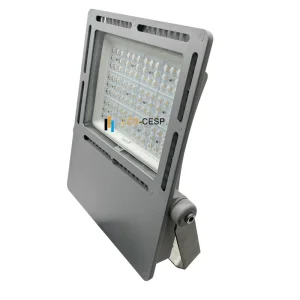
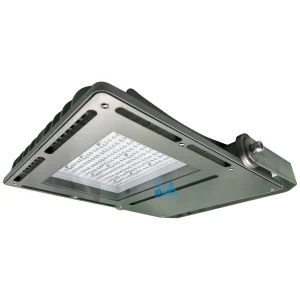
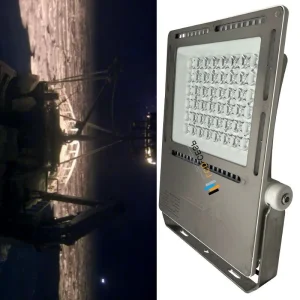
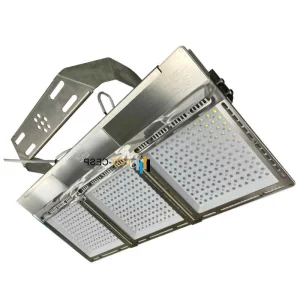
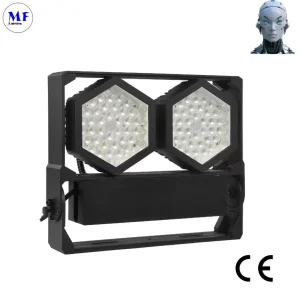
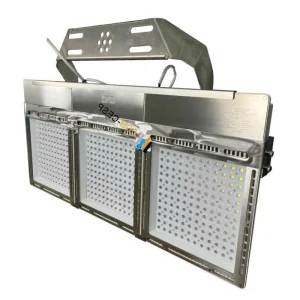
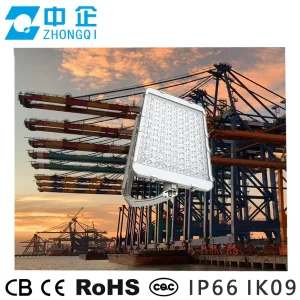
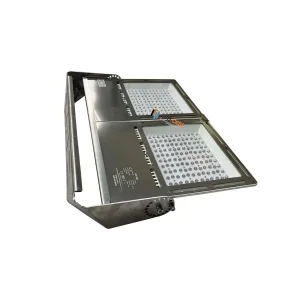
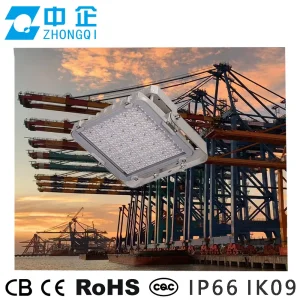
Industrial gantry cranes and yard lighting are subjected to continuous structural vibrations and heavy salt spray. Floodlights in these areas require 5G vibration certification and IK10 impact ratings, paired with asymmetric optics to illuminate vast dock spaces safely without blinding crane operators.
Local seafood facilities and fish farms require lighting that can operate under high-pressure cleaning washes. IP69K-rated luminaires withstand high-temperature washdowns, while specialized blue-green spectrums can support fish development in aquaculture tanks.
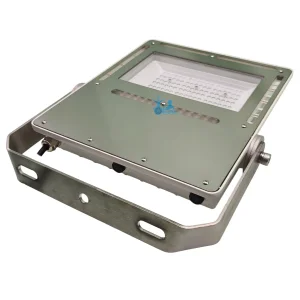
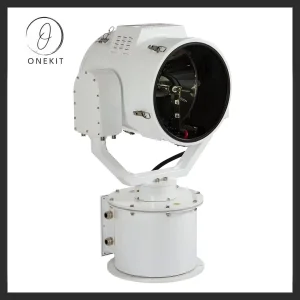
Vessels connecting Upolu (Mulifanua Wharf) and Savai'i (Salelologa Wharf) navigate through challenging conditions. Ship decks require DC-compatible (24-36VDC) LED floodlights with high CRI, along with high-lumen xenon searchlights for safe navigation.
In alignment with Samoa's National Energy Road Map, which aims for 100% renewable energy generation, marine lighting systems must be highly energy-efficient. Standard metal halide and high-pressure sodium floodlights pull substantial current, overloading shipboard generators and municipal grids. Transitioning to LED systems with performance ratings of 150 lm/W reduces carbon footprints and power demands on marine vessels. This allows shipping lines to allocate more generator capacity to refrigeration and auxiliary propulsion systems, lowering operational fuel costs.
To design lighting systems that last in high-saline atmospheres, engineers must prevent electrochemical corrosion. Our manufacturing processes utilize specialized materials and coatings to address these challenges:
When different metals touch in a wet, salty environment, galvanic corrosion occurs. This damages mounting brackets and bolts, which can lead to structural failures. To prevent this, our luminaires use non-conductive Teflon washers and polymer isolation gaskets. These barriers break the electrical circuit between the stainless steel brackets and the aluminum housing, protecting the structural integrity of the light fixture throughout its operating life.
Yangzhou Boray Light Co., Ltd. is located in Yangzhou, Jiangsu Province—one of China’s leading lighting manufacturing hubs. Founded over a decade ago, Boray Light has grown into a professional manufacturer and supplier specializing in LED lighting and solar solutions, serving clients worldwide with innovative, energy-efficient products.
Our company integrates R&D, production, sales, and service. With a self-owned modern factory, complete production lines, and advanced testing equipment, we are dedicated to delivering high-quality and reliable lighting solutions. Our products are widely applied in municipal projects, road and landscape lighting, industrial facilities, and residential spaces. Over the years, we have exported to Southeast Asia, the Middle East, Africa, Europe, South America, and the Pacific region, earning a strong reputation for quality and service.
Because Samoa is geographically isolated, freight reliability and supply chain efficiency are crucial. Shipping items from China's industrial hubs, like Yangzhou, directly to Apia Port offers cost and logistical advantages. Yangzhou Boray Light coordinates container shipping routes through major transit hubs in Auckland, Sydney, or Suva, ensuring reliable delivery timelines.
Our vertical manufacturing model lets us source raw materials, execute precision tooling, assemble electronics, and perform quality testing all in one facility. This integration shortens turnaround times for custom-engineered orders, helping project developers in Samoa keep their marine infrastructure projects on schedule.
Every lighting fixture undergoes strict quality control protocols before leaving our facility. We subject our marine-grade products to 1,000-hour salt spray testing to verify coating integrity, and run them on high-amplitude mechanical vibration tables to replicate shipboard environments. With these quality assurance procedures, our fixtures arrive in Samoa ready to withstand harsh oceanic conditions.
Our engineering team utilizes software like TracePro, Pro/E, and DIALux to design precise optical systems. We collaborate with universities and industrial institutions to develop energy-efficient fixtures suited for maritime operations. This research-focused approach ensures our systems meet the performance needs of Samoa's port and fishing infrastructure.
Maritime installations in Samoa are subject to international maritime rules and safety standards. Our luminaires are engineered to meet key global regulations, ensuring compliant operation:
By meeting these strict standards, Boray Light fixtures provide long-term reliability for marine operations, reducing maintenance costs and operational downtime in Samoa's maritime industries.
True marine-grade luminaires are built to withstand high salinity, moisture, and chemical exposure. Key components include corrosion-resistant alloys (such as SUS316 stainless steel or copper-free aluminum), protective fluorocarbon or powder-coated finishes, non-reactive isolation barriers to prevent galvanic corrosion, and high ingress protection (IP66/IP67/IP68) ratings.
SUS316 contains 2-3% molybdenum, which increases its resistance to chloride-induced pitting and crevice corrosion. In tropical, high-saline marine environments like Samoa's coastlines, standard SUS304 can suffer from surface rust and pitting, whereas SUS316 retains its structural integrity and appearance over longer operating periods.
We use non-conductive Teflon washers, polymer gaskets, and specialized isolation sleeves at all connection points where different metals meet (such as stainless steel brackets and aluminum housings). This prevents electrical contact and helps stop galvanic corrosion in wet, high-saline conditions.
Yes, we offer multiple voltage configurations. Our marine floodlights can be ordered with standard wide-range AC drivers (100-277VAC) or low-voltage DC drivers (24-36VDC), making them compatible with shipboard battery systems and solar microgrids.
We coordinate logistics from our Yangzhou factory through major shipping ports like Shanghai and Ningbo, routing cargo to Apia Port. We handle export documentation and offer robust packaging to ensure your order arrives safely and in compliance with Samoan customs requirements.
Contact Yangzhou Boray Light Co., Ltd. today for technical advice, custom photometric designs, or a project quotation.
Send Inquiry Now Boray Light