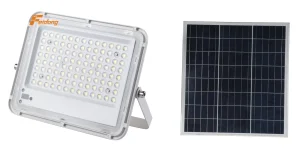
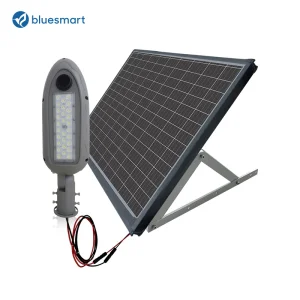
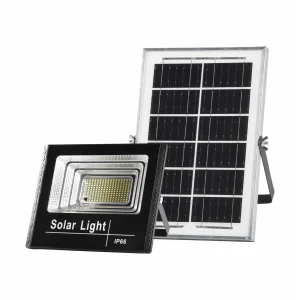
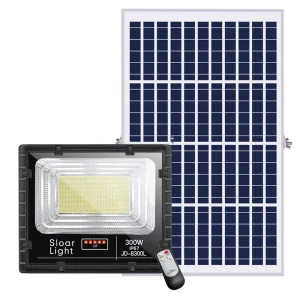
The Democratic Republic of the Congo (DR Congo) represents one of the most promising yet logistically demanding infrastructure landscapes in Central Africa. As key metropolitan hubs like Kinshasa, Lubumbashi, and Kolwezi experience massive commercial growth, outdoor media campaigns, transport corridors, and industrial signage are scaling rapidly. However, advertising agencies and logistics companies face a structural bottleneck: the local power grid (SNEL). With utility grid coverage sitting at historically low rates in major suburbs and highway networks remaining entirely un-electrified, relying on grid power for commercial Out-Of-Home (OOH) billboards is simply not viable.
Historically, businesses deployed diesel generators to keep billboards illuminated at night, resulting in astronomical operational expenses, fuel theft, carbon footprints, and high maintenance costs. Today, solar billboard floodlighting systems provide a reliable, maintenance-free, and decentralized lighting solution. Unlocking continuous 24/7 visibility for brand assets without consuming a single watt of utility grid energy, solar integration has shifted from a sustainable alternative to a primary business necessity in Central Africa.
Operating industrial hardware in the DR Congo demands a comprehensive understanding of the country's unique geographical and climatic profile. Situated along the equator, the region receives exceptional solar irradiance, averaging between 4.5 to 6.5 kWh/m²/day. This abundance of solar resource makes photovoltaic (PV) generation highly viable. However, the climatic conditions also present severe challenges: high temperatures that reduce solar panel efficiency, intense seasonal rainfall (with tropical storms causing high humidity), and dense dust storms during the dry season.
Standard off-the-shelf solar lights typically fail within 6 to 12 months in Central Africa due to battery degradation from excessive ambient heat and water ingress during downpours. High-tier industrial solar billboard floodlighting systems engineered for DR Congo feature:
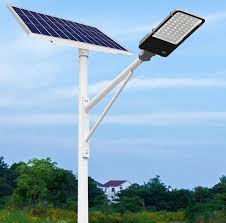
Worldwide, the commercial lighting sector is undergoing a structural revolution. With municipal bodies and multi-national brands committing to strict ESG (Environmental, Social, and Governance) targets, traditional high-intensity metal halide or standard grid-tied halogen floodlights are being phased out. Modern advertising agencies, real estate developers, and infrastructure operators are mandating that all new installations incorporate solar PV and LED assemblies. High-lumen LED chips consume up to 80% less energy than conventional lighting, allowing smaller PV panels and batteries to provide identical illumination levels. In remote locations, the avoidance of grid trenching, cabling, and transformer installation can save projects up to 60% in initial capital expenditures (CAPEX).
Yangzhou Boray Light Co., Ltd. is strategically based in Yangzhou, Jiangsu Province—one of China’s most prominent and advanced lighting manufacturing clusters. Operating at the global forefront of solar engineering, Boray Light has evolved into an industry-leading manufacturer and developer, exporting robust LED and solar assemblies worldwide. With over a decade of vertical engineering experience, we understand that industrial lighting is not a one-size-fits-all product; rather, it requires custom thermal management, highly efficient battery enclosures, and precise optical performance.
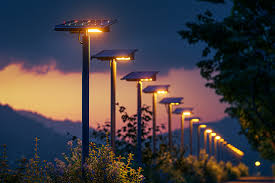
By leveraging Yangzhou's highly integrated industrial ecosystem, Boray Light ensures unmatched manufacturing efficiency. Our centralized supply chain optimizes the raw procurement of die-cast aluminum, solar monocrystalline wafers, high-grade LiFePO4 cells, and digital controllers. This structural advantage allows us to offer:
Our dedicated engineering department designs and simulates custom configurations using specialized software like TracePro, Pro/E, and DIALux. When a B2B procurement client shares the physical parameters of an outdoor billboard (height, width, clearance height, and target lux), our engineers calculate the precise luminaire placement, tilt angle, and optical dispersion required to eliminate hotspotting and dark areas, ensuring uniform, high-contrast, and eye-catching lighting. This professional-grade technical simulation guarantees that every dollar spent on equipment maximizes billboard visibility and advertising ROI.
Ensure optimal visual performance and eliminate dark spots on your outdoor advertising boards with Boray Light's professional design services.
Send Inquiry NowWhen engineering and sourcing hardware for commercial environments in the DR Congo, B2B procurement managers must analyze technical specifications beyond simply comparing costs. Inexpensive consumer-grade lights will quickly fail under tropical operational conditions. The table below outlines the core technical criteria that distinguish industrial-grade systems from standard products:
To ensure long-term durability and operational security, billboard installations must address specific regional factors:
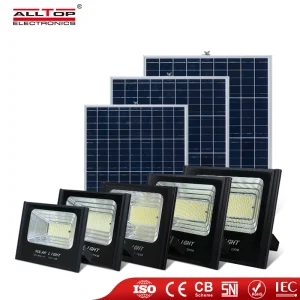
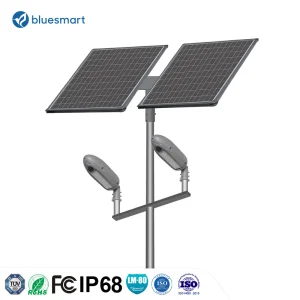
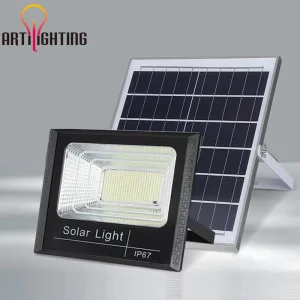
Contact Boray Light today to receive customized technical drawings, price lists, and energy-saving lighting evaluations for your project.
Send Inquiry Now Boray Light