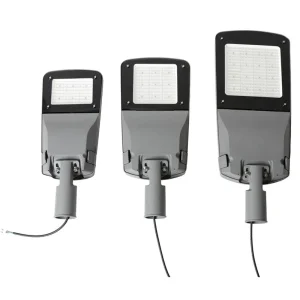
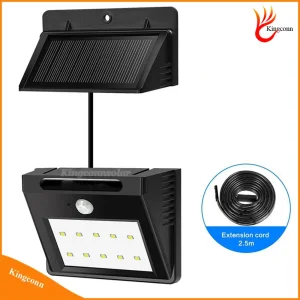
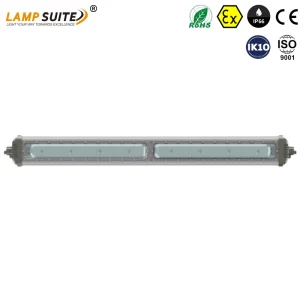
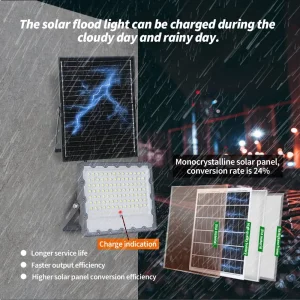
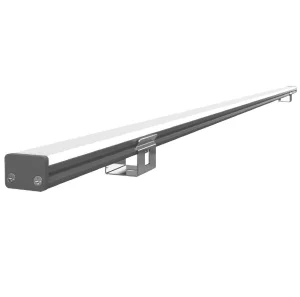
High-efficiency luminaire systems engineered for extreme environments, urban infrastructure, and architectural landscaping.
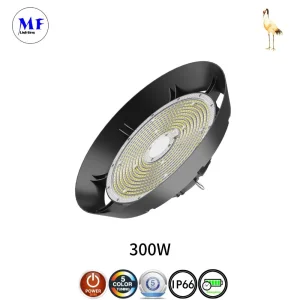
The global sports stadium lighting market is undergoing an unprecedented shift. Driven by rigorous environmental regulations, skyrocketing utility fees, and a mandate for zero-carbon emissions, developers are replacing traditional high-intensity discharge (HID) and metal halide fixtures with state-of-the-art solid-state LED systems. Modern sports arenas now demand high-mast systems that deliver extreme luminous efficacy exceeding 160 lm/W to 200 lm/W while keeping glare ratings (UGR) below 15.
International broadcasting committees (such as FIFA, IOC, and FIBA) mandate strict metrics for ultra-high-definition (UHD) and slow-motion video captures. Lighting installations must feature a high Color Rendering Index (CRI ≥ 80 or 90) and a Television Lighting Consistency Index (TLCI) of 85+. Crucially, the flicker factor must be under 1% to prevent strobe bands during high-speed, slow-motion playback.
Modern layouts utilize optimized micro-lens designs. This enables precise asymmetric optical configurations, redirecting scattered uplight to the playing surface, enhancing visual focus, and preventing light pollution in adjacent urban areas.
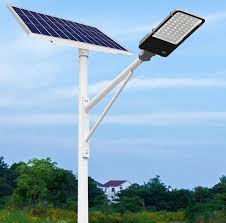
Strategically situated in Yangzhou, Jiangsu Province—one of China's preeminent hubs for lighting design and heavy industry fabrication—Yangzhou Boray Light Co., Ltd. has established itself as an authoritative manufacturer and supplier of top-tier LED outdoor fixtures and solar-powered solutions. Spanning over a decade of continuous technological innovation, Boray Light consistently delivers high-efficiency products designed for municipal infrastructure, logistics centers, harbor installations, and major athletic centers.
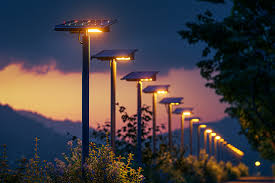
Boray Light integrates all stages of the manufacturing cycle, encompassing advanced product design, testing, optical engineering, and final product packaging. Our state-of-the-art facility features assembly lines utilizing robotic surface mount technology (SMT) and environmental test chambers. This integration enables Boray Light to supply critical components, ensuring thermal and structural integrity across all products.
Our solutions target commercial, municipal, and industrial projects worldwide. By exporting products to regions like Southeast Asia, the Middle East, Africa, Europe, and South America, Boray Light has established itself as a reliable OEM/ODM supplier on the global market.
A key factor in Boray Light's market success is its dedicated research and development department. Equipped with advanced structural and optical design suites—including TracePro, Pro/E, and DIALux—engineers simulate photometrical data, heat distribution, and light vectors prior to manufacturing. This simulation process minimizes localized losses, optimizes beam angles, and ensures compliance with global light pollution standards. Collaborating with domestic universities and international materials labs, Boray Light rapidly adopts developments in LED drivers, protective coatings, and high-efficiency chips.
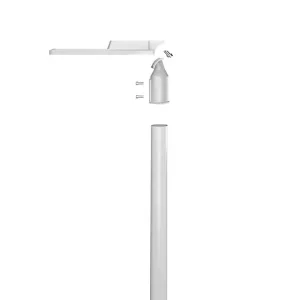
Boray Light manages its supply chain closely to guarantee quick turnaround times. We maintain inventory of key items—such as integrated solar streetlights, 80W high-efficiency solar panels, and 6-meter municipal light poles—allowing us to meet tight deadlines for municipal projects. In addition, critical team members (including our Plant Manager, R&D Lead, and International Sales Director) bring over a decade of industry experience, ensuring project stability from initial inquiry to field deployment.
High-efficiency floodlights deployed on high masts, coastal ports, and petrochemical sites face severe environmental challenges. Exposure to UV rays, salt spray, and extreme temperatures can accelerate material degradation. Understanding these demands, Boray Light implements advanced structural engineering in its industrial floodlights and heavy-duty marine-grade luminaires.
Standard architectural floodlights typically corrode within months when exposed to high-humidity coastal zones or harsh harbor areas. Boray's port crane and deck lights utilize high-pressure ADC12 die-cast aluminum housings, pre-treated with electrophoretic primers and finished with electrostatic polyester powder coatings.
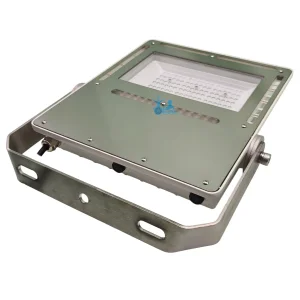
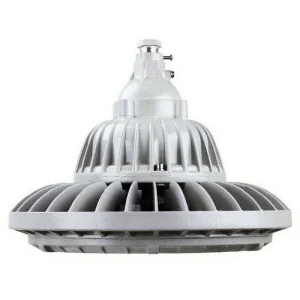
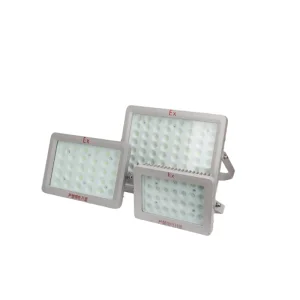
Industrial applications, such as chemical processing and mineral extraction sites, require robust safety ratings. Boray Light supplies explosion-proof products certified for Class I, Division 1 (C1D1) and ATEX hazardous zones. These fixtures utilize thick tempered glass faces capable of withstanding internal impacts, and threaded flameproof joints that prevent internal electrical arcs from igniting ambient vapors or dust.
The sports lighting industry is moving beyond basic illumination to integrate smart connectivity. By incorporating IoT nodes, sensors, and intelligent dimming controls, modern stadiums can dynamically adjust lighting levels based on ambient light, event schedules, and real-time utility rates. Boray Light remains at the forefront of this shift, integrating advanced network interfaces across its product lines.
By utilizing standard Zhaga Book 18 and NEMA 7-pin sockets, Boray's fixtures support plug-and-play nodes for wireless communication networks (such as LoRaWAN, Zigbee, or cellular NB-IoT). Operators can monitor energy use, track module temperatures, and receive automated maintenance alerts remotely, lowering operational costs and reducing truck rolls.
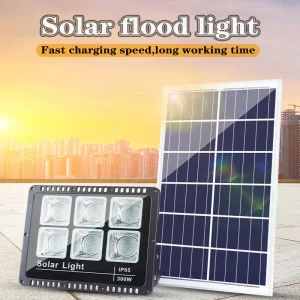
As off-grid energy storage systems improve, solar-hybrid sports lights are becoming a viable option for municipal recreational facilities. Combining high-efficiency LED arrays with lithium iron phosphate (LiFePO4) battery packs and smart controllers, these systems charge during daylight hours and discharge at night, eliminating utility grid dependence and providing reliable backup lighting during power outages.
Technical clarifications and sourcing guidance for stadium design engineers and municipal procurement officers.
Solar-powered, smart, and explosion-proof lighting fixtures engineered to support municipal, commercial, and safety critical infrastructure.
 Boray Light