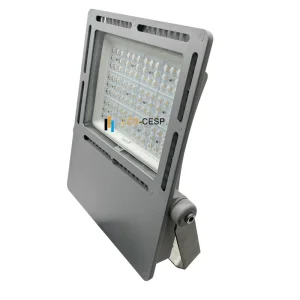
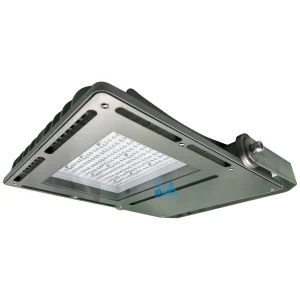
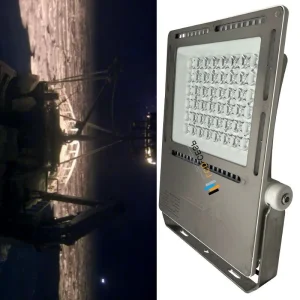
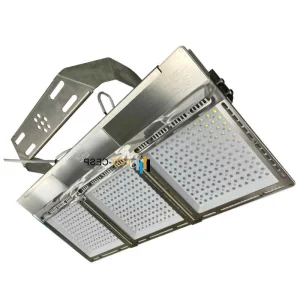
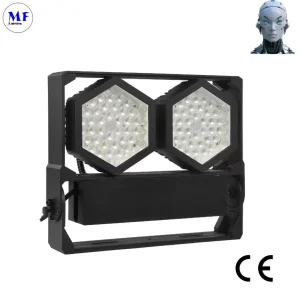
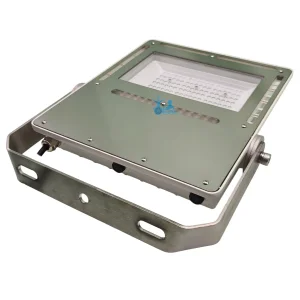
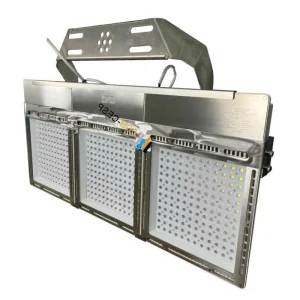
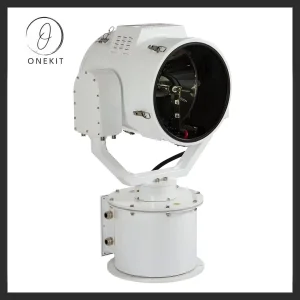
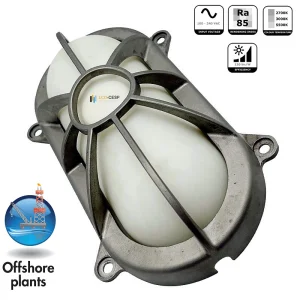
Specially engineered systems optimized for regional deployment in the Gulf of Guinea, satisfying harsh salt spray, extreme humidity, and offshore mechanical strains.
Equatorial Guinea, situated at the heart of the Gulf of Guinea, occupies a vital geopolitical and industrial position in Central Africa. Geographically divided between the continental Rio Muni region and the volcanic island of Bioko (hosting the capital city, Malabo), the country’s economy is deeply intertwined with maritime logistics, offshore petrochemical exploration, natural gas liquefaction, and developing deep-sea aquaculture sectors. Major commercial hubs such as the Luba Freeport, Bata Port, and the massive hydrocarbon production infrastructures at Punta Europa require rugged, continuously operational infrastructure.
Operating electrical equipment in Equatorial Guinea presents extreme environment challenges. The local climate is categorized by persistent high relative humidity (averaging between 85% and 95% year-round), high ambient atmospheric temperatures averaging 26°C to 30°C, high ultraviolet index levels, and a dense, salt-laden marine aerosol boundary layer. These environmental forces accelerate electrochemical and chemical corrosion on standard materials. Traditional fixtures succumb to pitting, galvanic degradation, and structural stress corrosion cracking within months.
As a premier Marine-Grade Anti-Corrosion Lights Manufacturer, we customize systems that survive and thrive under these exact parameters. Designing for Equatorial Guinea means applying aerospace-grade thermal management, heavy-gauge non-corrosive metals, and hermetic sealing to secure capital assets, guarantee operational safety, and reduce the Total Cost of Ownership (TCO) across local industrial operations.
Corrosion in marine environments is an electrochemical reaction governed by the availability of electrolytes (saline water) and oxygen. In the warm waters of the Gulf of Guinea, this reaction rate is thermally accelerated. To mitigate this, our engineering philosophy focuses on three pillars of material integrity:
Standard structural fixtures rely on SS304 stainless steel, which lacks sufficient resistance to high-salinity chloride ions, leading to pitting corrosion. We utilize 316 Grade Stainless Steel (SS316) containing 2-3% Molybdenum. This chemical difference significantly elevates the alloy's Pitting Resistance Equivalent Number (PREN), forming a passive, self-healing chromium oxide layer that prevents localized pitting and crevice corrosion.
Our cast parts, engineered from ADC12 copper-free aluminum alloy, undergo an multi-stage surface treatment. This includes chemical conversion, followed by a primer and a high-durability thermosetting powder topcoat. The resulting dry film thickness easily complies with the ISO 12944 classification for C5-M (Very High Marine) environments, showing zero deterioration after 1,000 hours of continuous ASTM B117 salt spray exposure.
Daily temperature cycles on offshore structures lead to pressure fluctuations inside the housing, causing seal failure and moisture ingress. Our luminaires are sealed with high-tensile, anti-aging silicone gaskets and fitted with integrated ePTFE breathers. These components balance internal and external pressures while preventing water vapor from bypassing the IP67/IP68/IP69K barriers.
Yangzhou Boray Light Co., Ltd. is situated in Yangzhou, Jiangsu Province—one of China’s premier industrial lighting hubs. Established over a decade ago, Boray Light has evolved into a global manufacturer and exporter of heavy-industry LED luminaires, solar energy structures, and intelligent municipal infrastructure.
By integrating industrial design, optics R&D, structural engineering, precision CNC manufacturing, and rigorous testing protocols, we control the entire quality pipeline. We cater to municipal developers, global EPC contractors, and marine supply houses in the Americas, Europe, the Middle East, and key West and Central African hubs like Malabo, Bata, and Luba.
Our core mission is to construct resilient, highly efficient lighting architectures that reduce overhead, ensure safety, and improve visibility in harsh marine and industrial environments.
Our engineering teams use advanced tools like TracePro and Pro/E for mechanical modeling, and DIALux for precise photometric simulation. This allows us to map out lighting arrays for complex locations like Equatorial Guinea container yards, vessel decks, or refinery zones.
With key executives—including our Plant Director, Chief R&D Engineer, and International Trade Coordinator—possessing over 10 years of experience within Boray Light, we maintain absolute design continuity. We control a vertically integrated supply chain, sourcing top-tier LED chips, custom-wound drivers, robust housings, and brackets to guarantee prompt delivery of specialized projects.
We also maintain localized inventory levels for high-demand components, allowing rapid shipping to Central African ports for quick turnaround projects.
China’s manufacturing landscape has transitioned from high-volume assembly to automated, Industry 4.0 precision engineering. For international buyers operating in Equatorial Guinea’s energy and logistics sectors, this shift translates to unmatched quality, performance, and supply chain resilience.
At Boray Light, our Yangzhou production facility leverages computerized die-casting machinery, robotic pick-and-place lines, and automated silicon sealing stations. Automated quality control systems detect structural micro-cracks in housing units and inspect component placement on PCBs. This ensures every fixture leaving our line delivers consistent performance.
Furthermore, our proximity to the Yangtze River Delta industrial cluster allows us to quickly source raw materials and premium components. This integrated ecosystem protects our production schedules from global supply chain disruptions. When you order heavy-duty marine lighting for projects in Malabo or Luba, our logistics pipelines ensure fast transit, reliable ocean freight coordination, and complete documentation compliance.
Our anti-corrosion luminaires are engineered to address the specific environmental and operational challenges found in Equatorial Guinea's key industrial zones:
Offshore drillships, FPSOs, and fixed platforms in the Gulf of Guinea operate under continuous salt spray, high ambient humidity, and vibration from drilling gear. Our explosion-proof titanium alloy and SS316 floodlights supply reliable, safe illumination for hazardous areas, helidecks, and deck perimeters.
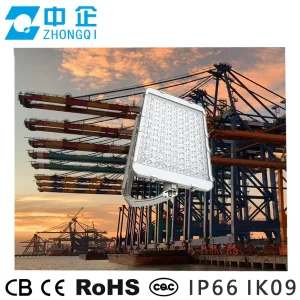
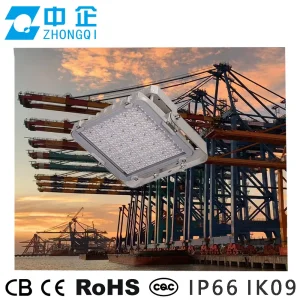
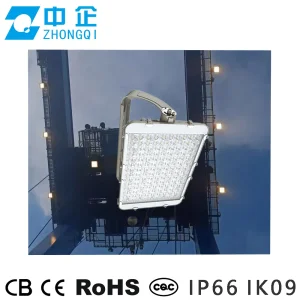
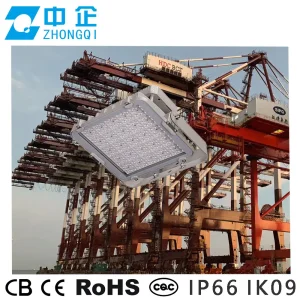
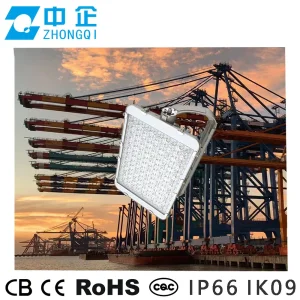
Container handling cranes and loading docks run 24/7. High-altitude crane lighting must handle persistent structural vibration and wind loads. Engineered with a 5G vibration resistance rating and C5-M coatings, our floodlights provide excellent color rendering (CRI >80) and glare control, improving nighttime operations.
Aquaculture infrastructure requires highly specialized underwater lighting. Our IP68 and IP69K stainless steel fixtures offer high chemical resistance to saltwater submersion, providing optimal spectrum and distribution to support fish growth without moisture ingress.
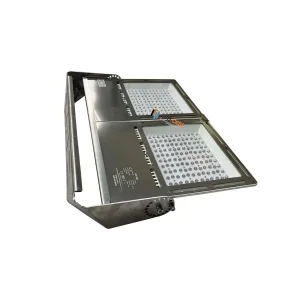
Browse our comprehensive selection of high-durability, corrosion-resistant lighting fixtures, certified for offshore platforms, commercial ports, naval applications, and industrial plants.
For engineering managers and procurement officers, specifying industrial marine fixtures involves balancing compliance criteria and performance metrics. Substandard lighting selection increases risk, creates safety issues, and raises operating costs. When selecting lighting systems for the Equatorial Guinea industrial market, verify the following parameters:
A true marine luminaire requires an IP66/IP67/IP68 rating. For environments exposed to high-pressure cleaning, such as processing decks or fish handling areas, look for IP69K certification. This ensures seals can withstand direct steam jets and high-pressure water streams.
Vessels and port cranes subject light fixtures to continuous physical vibrations. Standard commercial lights will experience internal solder joint failures or optical displacement. Ensure fixtures carry an IK09/IK10 impact rating and have passed 5G vibration testing to handle continuous mechanical stress.
Petrochemical zones, including LNG terminals and tanker docks, require explosion-proof ratings. Check that fixtures hold ATEX or IECEx certificates for Zone 1 or Zone 2 atmospheres, ensuring surface temperatures remain well below the ignition thresholds of volatile gases.
Boray Light designs its product lines to meet these requirements. We provide complete technical data sheets, photometric IES files, and safety certificates to streamline the procurement process.
Expert advice on selecting, installing, and maintaining anti-corrosion marine lighting systems in tropical offshore environments.
Contact our technical sales team for custom optical simulations, quotes, or to discuss specific compliance needs for your operations in Equatorial Guinea.
Send Inquiry Now Boray Light